
Train for Fall Sports with Compex: Build Strength and Endurance for the Season Ahead
Fall sports season moves fast.
One week you're easing back into practices. The next, you're balancing workouts, games, tournaments, travel, school, work, and everything else on the calendar.
Whether your season means football, soccer, cross country, volleyball, field hockey, or simply getting back into a more structured training routine, one thing stays the same:
You need your muscles ready for the work.
That’s where electromuscular stimulation, or EMS, can become part of your training plan.
Compex® EMS uses electrical impulses to stimulate motor nerves and create muscle contractions. When used consistently alongside your regular training, EMS can provide an additional training stimulus designed to support goals like muscle strength and endurance.
Here’s how to put it to work this fall.
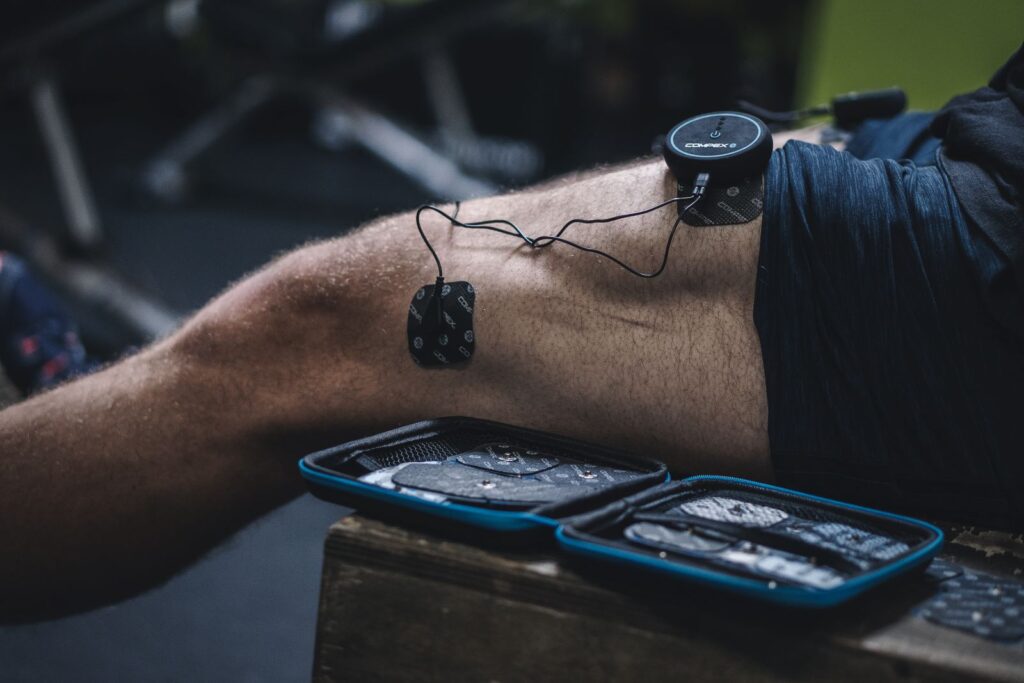
Strength Matters in Almost Every Sport
Strength isn’t just about how much weight you can lift.
For athletes, stronger muscles help support the physical demands of accelerating, jumping, changing direction, holding position, climbing hills, sprinting, and repeating those movements throughout competition.
And research suggests EMS can be an effective way to train strength.
Research suggests EMS can help build muscle strength. In a 2023 review of 10 studies involving healthy adults, every study found improvements in strength after EMS training.¹ Another review found that, when the amount of training was similar, EMS helped improve strength about as much as traditional strength training.²
The important takeaway?
EMS isn’t a shortcut around training. It’s another way to challenge your muscles as part of a structured program.
Add Compex to Your Strength Training
Compex strength programs are designed to create repeated, electrically stimulated muscle contractions.
Depending on your device and training goals, you can target major muscle groups such as the:
That makes it possible to add focused EMS work around the muscles that matter most for your sport.
A soccer player, for example, may prioritize the quadriceps, hamstrings, glutes, and calves. A runner may put more emphasis on the major muscle groups of the legs. An athlete whose sport requires more upper-body strength can incorporate EMS into training for those muscle groups as well.
The goal isn’t to replace your squats, lunges, runs, practices, or sport-specific drills.
It’s to add another muscular stimulus to the work you’re already doing.
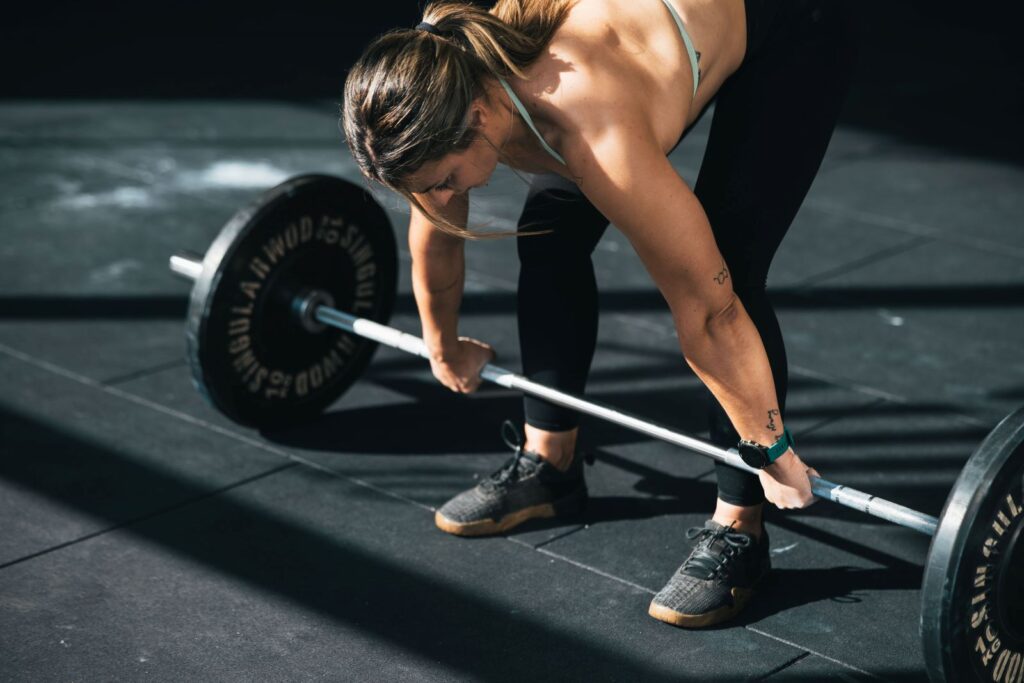
Training for Endurance? EMS Has a Role There Too.
Fall sports rarely require just one explosive effort.
They require you to repeat movements over and over.
Run another route. Chase another ball. Climb another hill. Take another point. Finish another interval.
That’s where muscular endurance becomes important.
EMS may support more than just strength. A 2022 review found that EMS training was linked to improvements in several areas related to endurance, including how efficiently the body uses oxygen and how efficiently you run.³
Because endurance performance is highly specific to the demands of each sport, EMS is often used alongside regular endurance training rather than a replacement for running, conditioning, or sport-specific workouts.
Your sport builds sport-specific endurance.
Compex gives you an additional way to train the muscles doing the work.

Train for What Your Sport Actually Demands
A stronger athlete isn’t automatically a better athlete.
The strength has to transfer to the field, court, course, or trail.
That’s why Compex should complement the rest of your training. If your sport involves sprinting, you still need to sprint. If it requires jumping, you still need to jump. If you’re preparing for a cross-country season, you still need to run.
EMS gives your muscles an additional training stimulus, while your regular training develops movement patterns, coordination, conditioning, and skills specific to your sport.
What Does That Look Like in the Real World?
Research in competitive athletes gives us a good example of how EMS can fit into a training plan.
In one study, elite soccer players added whole-body EMS sessions twice a week to their regular training. After 14 weeks, the athletes using EMS improved leg strength, along with measures of sprinting, jumping, and kicking performance.⁴
That doesn’t mean every EMS program will lead to the same results. But it does show how athletes can use EMS alongside their regular workouts to support strength and performance goals.
Consistency Still Wins
You don’t build a season in one workout.
You build it through practices, training sessions, strength work, conditioning, and consistent effort over time.
The same principle applies to EMS.
One session isn’t the strategy.
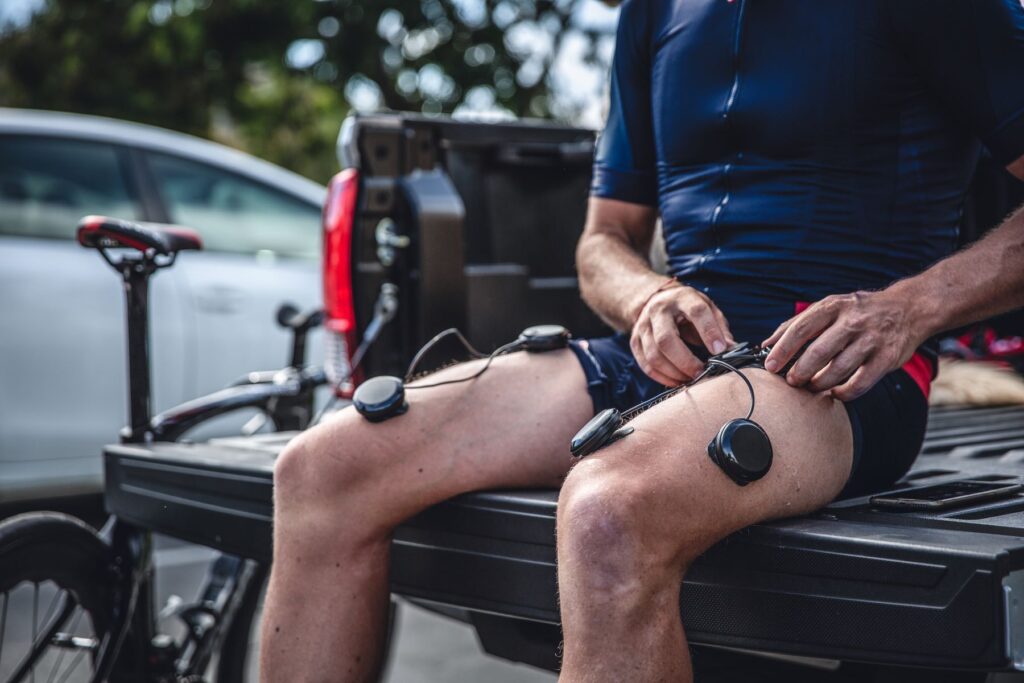
Following the appropriate Compex program consistently, using the correct electrode placement, and integrating EMS into a well-rounded training plan gives you a structured way to add muscle stimulation to your routine.
Start with the programs recommended for your device and your goals and follow the intensity and placement instructions provided with your Compex unit.
Then keep doing the work that matters most: training for your sport.
Build More Into Your Fall Training
Fall schedules can fill up quickly.
That doesn’t mean your training goals have to take a back seat.
Compex® EMS gives you another tool for targeting strength and endurance as part of the training you’re already doing.
Pair it with strength training. Pair it with conditioning. Pair it with the practices and workouts that prepare you for your sport.
Because when the season starts moving, you want your training to move with it.
References
- Mukherjee S, Fok JR, van Mechelen W. Electrical stimulation and muscle strength gains in healthy adults: a systematic review. Journal of Strength and Conditioning Research. 2023;37(4):938-950. doi:10.1519/JSC.0000000000004359.
- Happ KA, Behringer M. Neuromuscular electrical stimulation training vs. conventional strength training: a systematic review and meta-analysis of the effect on strength development. Journal of Strength and Conditioning Research. 2022;36(12):3527-3540. doi:10.1519/JSC.0000000000004119.
- da Mota Moreira I, Krause A, Memmert D. Effects of electromyostimulation on physiological determinants of endurance-performance in healthy subjects: a systematic review. Journal of Sports Medicine and Physical Fitness. 2022;62(12):1654-1661. doi:10.23736/S0022-4707.22.13428-6.
- Filipovic A, Grau M, Kleinöder H, Zimmer P, Hollmann W, Bloch W. Effects of a whole-body electrostimulation program on strength, sprinting, jumping, and kicking capacity in elite soccer players. Journal of Sports Science & Medicine. 2016;15(4):639-648.